How and Why You Should Wash Strawberries Properly
How and Why You Should Wash Strawberries Properly
Strawberries are one of the most popular fruits during spring and summer, but many people simply rinse them quickly under water and start eating them immediately.
The problem is that strawberries often contain:
- dirt
- dust
- pesticides
- small insects
- bacteria from transport and handling
Because strawberries have a soft and porous surface, they can easily collect impurities.
Why washing strawberries matters
Even strawberries that look clean may still carry residue from farming, transportation, or store shelves.
Proper washing helps:
- remove dirt and dust
- reduce pesticide residue
- wash away bacteria
- keep strawberries fresher for longer
1. Do not wash strawberries too early
One common mistake is washing strawberries immediately after buying them and then storing them wet in the fridge.
Extra moisture can make them spoil faster.
It is best to wash strawberries:
- right before eating
- or just before preparing desserts or smoothies
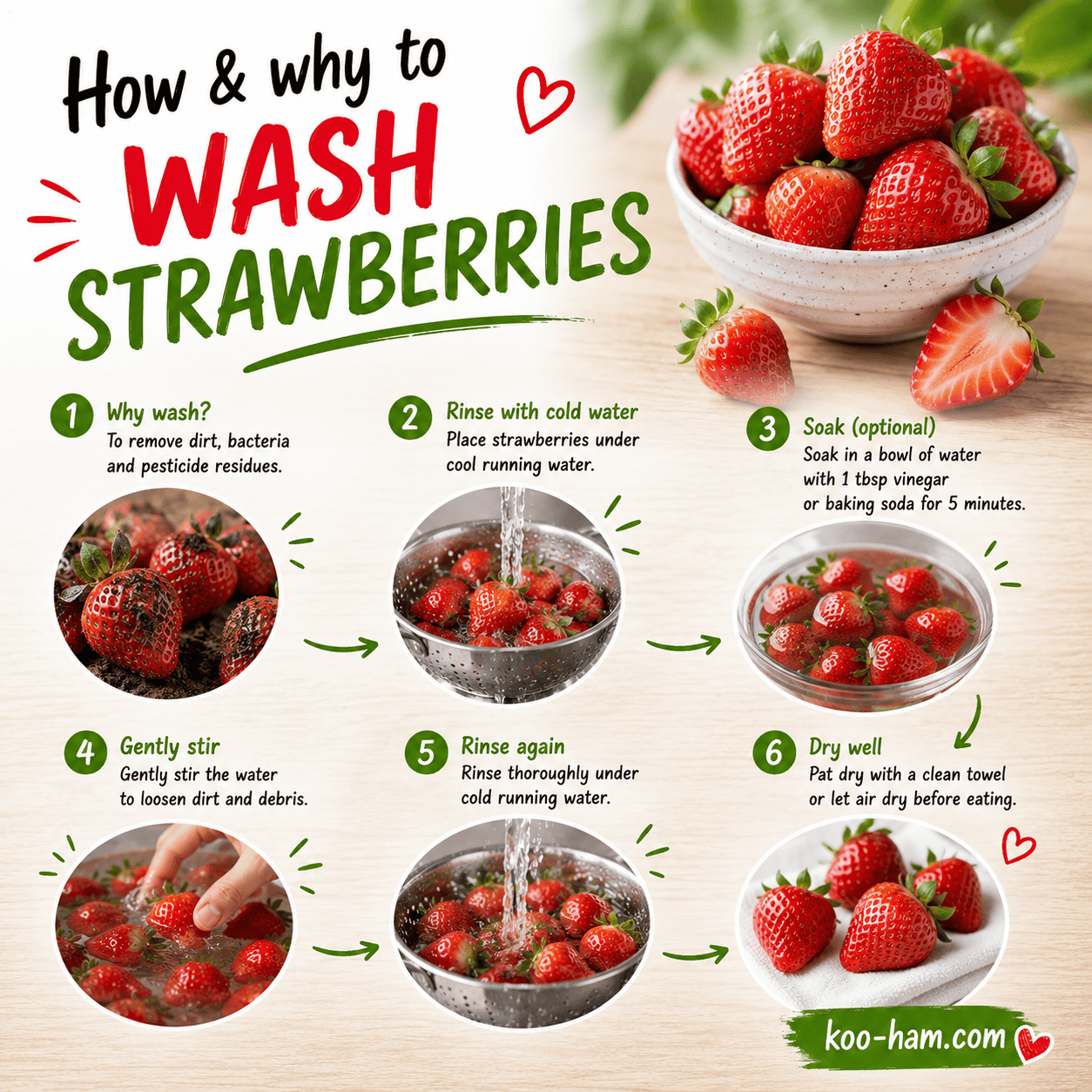
2. Rinse them under cold water
Place the strawberries in a colander and gently rinse them under cold running water.
Avoid using very hot water because strawberries are delicate and can soften quickly.
3. Optional: soak briefly
Some people prefer soaking strawberries for a few minutes in water with a little vinegar or baking soda.
This may help remove additional dirt and residue.
After soaking:
- rinse them again with clean water
- dry gently with paper towels
4. Remove the green tops after washing
It is better to keep the stems on while washing.
If you remove them first, strawberries can absorb extra water and lose some flavor.
Tip
Soft, damaged, or moldy strawberries should be removed immediately so they do not spoil the rest.
Fresh strawberries should smell sweet, feel firm, and have a bright red color.